 Buy now, pay later — powered by PayPal
Stained glass
Copper foil tape for stained glass: the Tiffany method explained
Copper foil tape is what holds a copper-foil stained-glass panel together. You wrap each cut glass edge in adhesive copper, burnish it flat, then solder over the foil to bond the pieces — the method made famous by Tiffany lamps and suncatchers. This guide from Little Copper Garden walks through choosing a width, wrapping and burnishing edges, and soldering clean seams.
How is copper tape used in stained glass?
In the copper-foil method, every piece of cut, ground glass is wrapped around its edge with adhesive copper foil so a small margin folds onto each face. Once burnished flat, the foil gives the solder something to grip, letting you join intricate, curved shapes that lead came can't easily follow. The foil becomes the visible metal line in the finished panel.
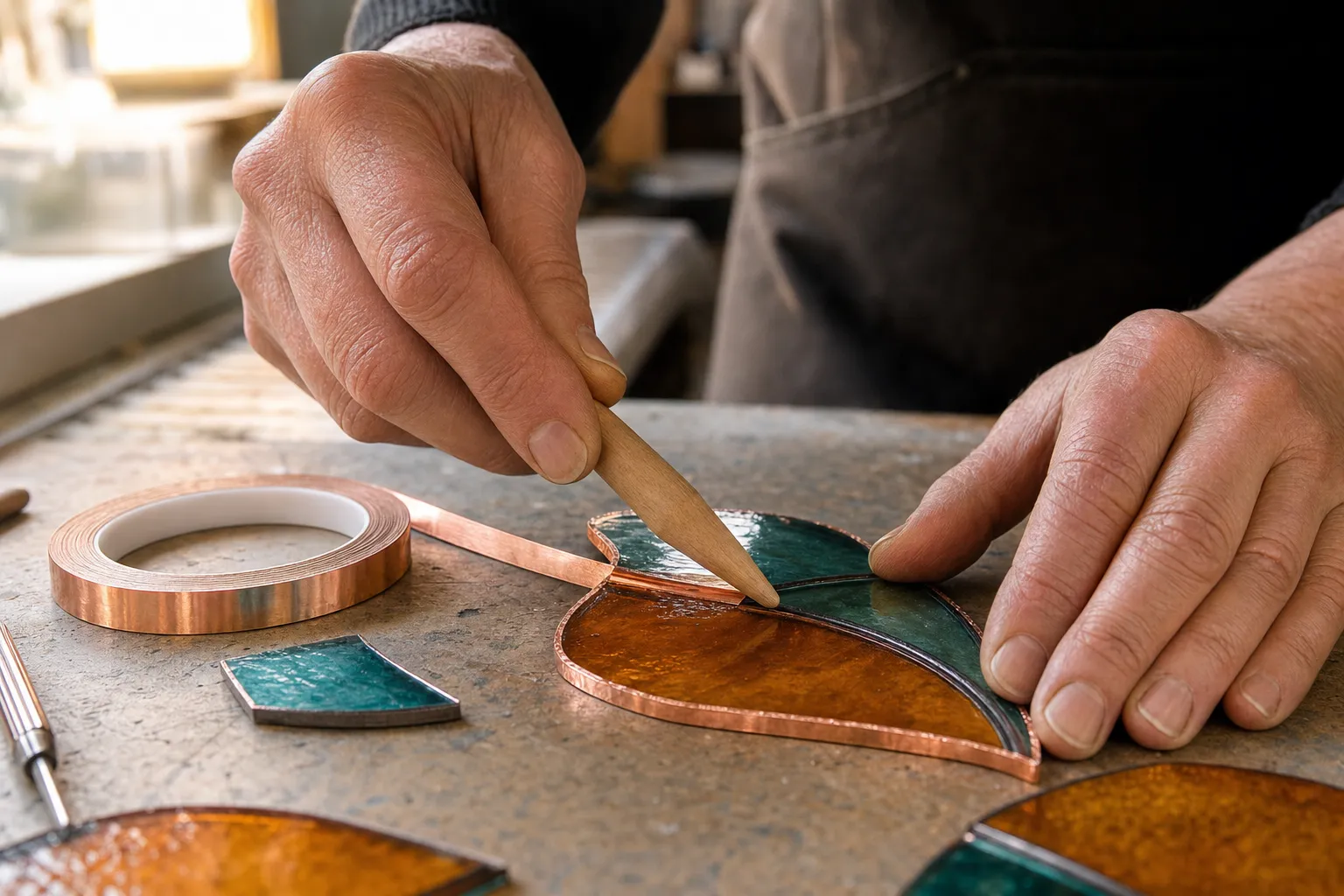
In short: copper foil wraps and seals each glass edge so the pieces can be soldered together in the Tiffany technique.
How do you foil and solder a piece step by step?
Foiling follows five steps: grind and clean the edge, centre the foil, fold the margins onto both faces, burnish flat, then flux, tin and solder. Take your time on burnishing — it's what separates a crisp seam from a lumpy one.
- Grind and clean each glass edge. Grind every cut edge smooth, then wipe it clean and dry. Copper foil tape sticks reliably only to a clean, grease-free edge, and a smooth edge gives an even foil line.
- Centre the foil on the edge. Peel a length of tape and lay the glass edge down the middle of the adhesive so an equal margin folds onto each face. Press the glass into the tape as you work along the edge.
- Fold the margins onto both faces. Fold the overhanging copper down onto the front and back of the glass, working it tight into the corners so the foil hugs the contour of the piece.
- Burnish the foil flat. Run a fid or lathekin firmly along the edge and both faces to burnish the copper flat, removing wrinkles and air gaps so it bonds smoothly and takes solder evenly.
- Flux and tin, then solder the seams. Apply flux, tin the foil with a thin coat of solder, then build a smooth bead along the seams to join the pieces. Conductive foil that's well burnished gives the cleanest, strongest joint.
In short: grind, wrap, fold, burnish, then flux and solder — a clean burnished edge gives the best seam.
Which copper tape width should you choose for glass?
Pick the width by your glass thickness so the folded margin grips each face without looking heavy. Thin standard glass usually wants the narrowest tape; thicker glass and bevels need a wider foil. Our range runs from fine 5 mm up to broad 50 mm, all the same conductive, solderable foil.
| Width | Best for |
|---|---|
| 5 mm | Standard ~3 mm glass, fine detail and tight curves |
| 10 mm | Thicker glass, bevels and bolder foil lines |
| 20–24 mm | Wrapping cabochons, nuggets and chunky edges |
| 50 mm | Lining boxes/bases and non-foiling craft uses |
- Copper Tape - 5mm x 25m — £4.09
- Copper Tape - 10mm x 25m — £5.19
- Copper Tape - 20mm x 25m — £6.09
- Copper Tape - 24mm x 12m — £6.09
- Copper Tape - 50mm x 15m — £10.49
In short: thinner glass takes narrower foil — see the width guide to match the roll to your work.
Frequently asked questions
- What width of copper foil tape do I need for stained glass?
- Match the tape width to your glass thickness so a small, even margin folds onto each face. For typical 3 mm (1/8 inch) glass, narrow 5 mm tape is the usual choice; thicker glass, bevels or wrapping cabochons may need 10 mm or wider. The aim is enough overlap to grip both faces without a wide, untidy margin.
- Why does copper foil tape need to be burnished?
- Burnishing presses the foil flat and removes air pockets and wrinkles so it bonds tightly to the glass. A well-burnished edge takes flux and solder evenly, giving a smooth, strong seam — unburnished foil lifts at the edges and produces a lumpy, weak joint.
- Can I use copper tape for the Tiffany method?
- Yes — copper foil tape is the heart of the copper-foil (Tiffany) technique. You wrap each glass edge, burnish the foil flat, then solder over it to bond the pieces into a panel or suncatcher. It lets you join intricate, curved shapes that lead came can't easily follow.
- Does the copper tape's adhesive affect soldering?
- The foil itself is what you solder to, not the adhesive. Our copper tape uses a conductive adhesive, which helps continuity, but the key for clean seams is a clean, ground, well-burnished edge and proper fluxing before you tin and bead the solder.