 Buy now, pay later — powered by PayPal
Electronics
Copper tape for electronics & repairs: circuits, grounding & fixes
Because it's solid, solderable copper foil, copper tape is genuinely useful on the electronics bench — for flat conductive tracks, grounding and bonding paths, paper circuits and quick repairs. This guide from Little Copper Garden covers the main jobs and how to make connections that last.
What can you do with copper tape in electronics?
Copper tape gives you a thin, flat, solderable conductor you can stick almost anywhere. The four most common jobs are conductive tracks, grounding and bonding, paper circuits and STEM projects, and small repairs.
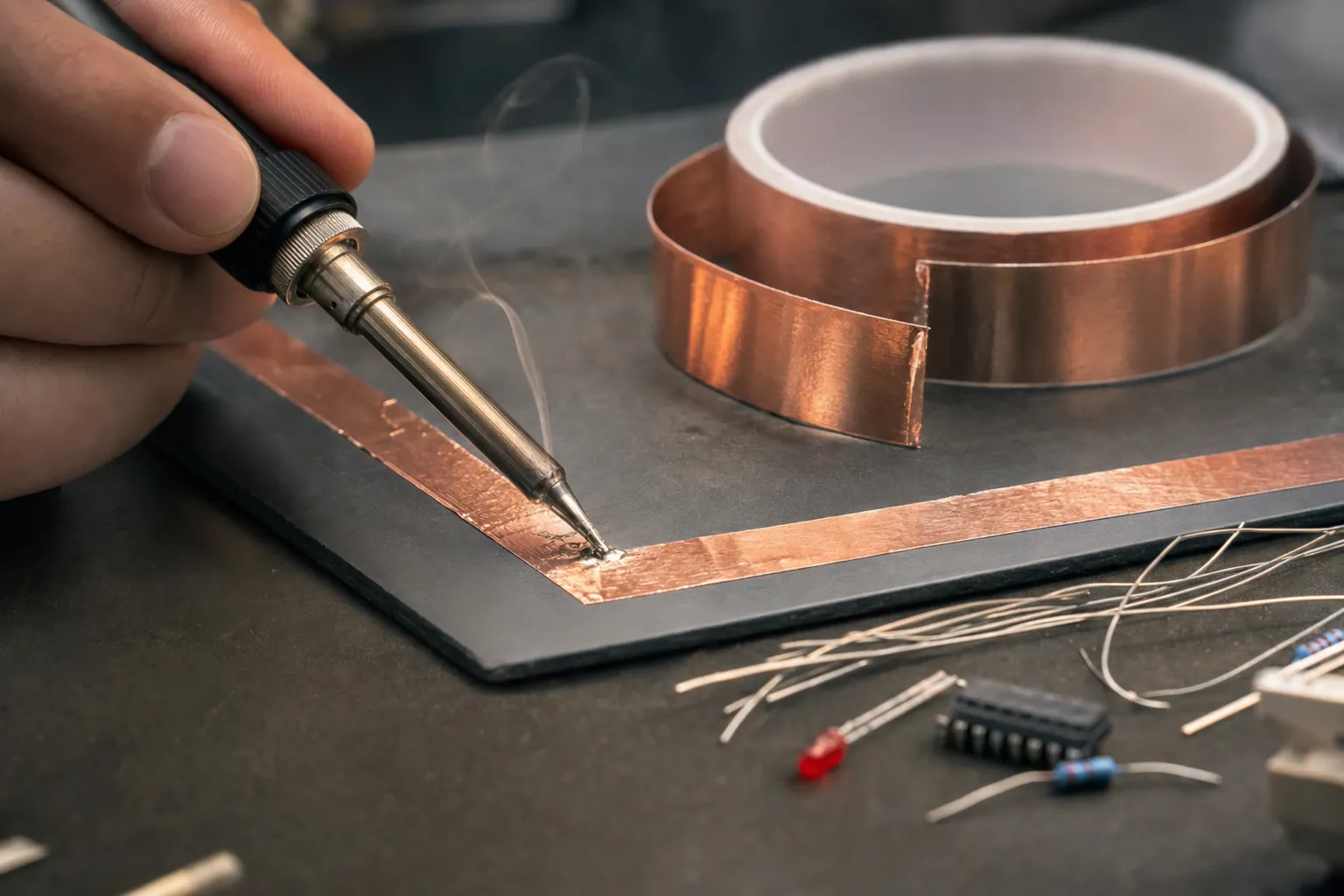
- Conductive tracks — Lay copper tape as a flat, solderable trace to carry low-voltage signals or power across a surface — handy for prototypes and one-off builds where a PCB is overkill.
- Grounding & bonding — Bridge metal parts, drain static, or create a ground plane. Because the foil takes solder, you can tie components straight to the copper.
- Paper circuits & STEM — Copper tape is the classic medium for paper circuits — wire up an LED and a coin cell on card to teach simple electronics safely and cheaply.
- Cable, antenna & contact repairs — Patch a worn ground braid, extend a loop antenna, or rebuild a corroded battery contact. The thin foil sits flat and solders to most metals.
In short: copper tape makes flat solderable tracks, grounds and bonds, paper circuits and tidy repairs.
How do you make a connection that lasts?
Plan the path, lay the tape flat with overlapping corners, solder the joints that matter, and insulate anything that could short. Soldering overlaps and component connections gives the most reliable, low-resistance joint.
- Plan the path and clean the surface. Sketch where the track or bond needs to run, then wipe the surface clean and dry so the adhesive grips and the copper makes good contact.
- Lay the tape with overlapping corners. Press the foil down flat, smoothing as you go. At corners and junctions, overlap rather than butt the ends so current has an unbroken path along the copper.
- Solder joints where you need reliability. For a dependable connection, add a small solder joint at overlaps and where components meet the tape. Our conductive adhesive helps continuity, but solder is best for load-bearing or critical joints.
- Insulate and protect if needed. Where a bare copper run could short against something, cover it with insulating tape or route it clear. Keep mains and high-voltage work to qualified people — copper tape is for low-voltage and signal work.
In short: overlap corners, solder critical joints, and keep copper tape to low-voltage and signal work.
Which width should you use?
Narrow 5–10 mm tape suits fine traces, paper circuits and tight repairs; wider 20–24 mm tape carries more current and makes broad ground planes. All our widths are the same conductive, solderable foil.
- Copper Tape - 5mm x 25m — £4.09
- Copper Tape - 10mm x 25m — £5.19
- Copper Tape - 20mm x 25m — £6.09
- Copper Tape - 24mm x 12m — £6.09
- Copper Tape - 50mm x 15m — £10.49
In short: narrow for fine traces, wider for current and ground planes — see the width guide.
Frequently asked questions
- Is copper tape conductive and solderable?
- Yes. It is solid copper foil, so it conducts electricity along its length and takes solder, which is what makes it useful for conductive tracks, grounding, paper circuits and repairs. Our tape also has a conductive adhesive, so overlapping seams stay electrically continuous.
- Can I use copper tape instead of wire?
- For low-voltage and signal work, often yes — a flat copper trace can replace wire where you want it to sit flush on a surface, as in paper circuits or a prototype. For higher current, mains, or anything safety-critical, use appropriately rated wire and connectors instead.
- How do I make a reliable joint with copper tape?
- Overlap the strips (don't just butt the ends), press them flat, and add a small solder joint at overlaps and component connections. Soldering gives the most reliable, low-resistance joint; the conductive adhesive helps but is best treated as a backup, not the sole connection on critical paths.
- Can copper tape repair a corroded contact or antenna?
- It can be a quick, effective fix. The thin foil sits flat over a worn ground braid, a corroded battery contact or a broken loop-antenna trace, and because it solders to most metals you can bond it permanently. For permanent or critical repairs, solder the joint rather than relying on adhesive alone.