 Buy now, pay later — powered by PayPal
Garden
Do copper slug barriers actually work? What the evidence says
Copper tape is one of the most popular chemical-free slug deterrents — but does it really work? The honest answer: yes, as a properly applied, unbroken barrier, but it isn't magic and most failures come down to how it's fitted, not the copper itself. Here's a plain look at what works, what doesn't, and how to give it the best chance.
In short: copper barriers work when the band is complete, clean and unbridged — gaps, leaf bridges and dirt are why people say it "didn't work".
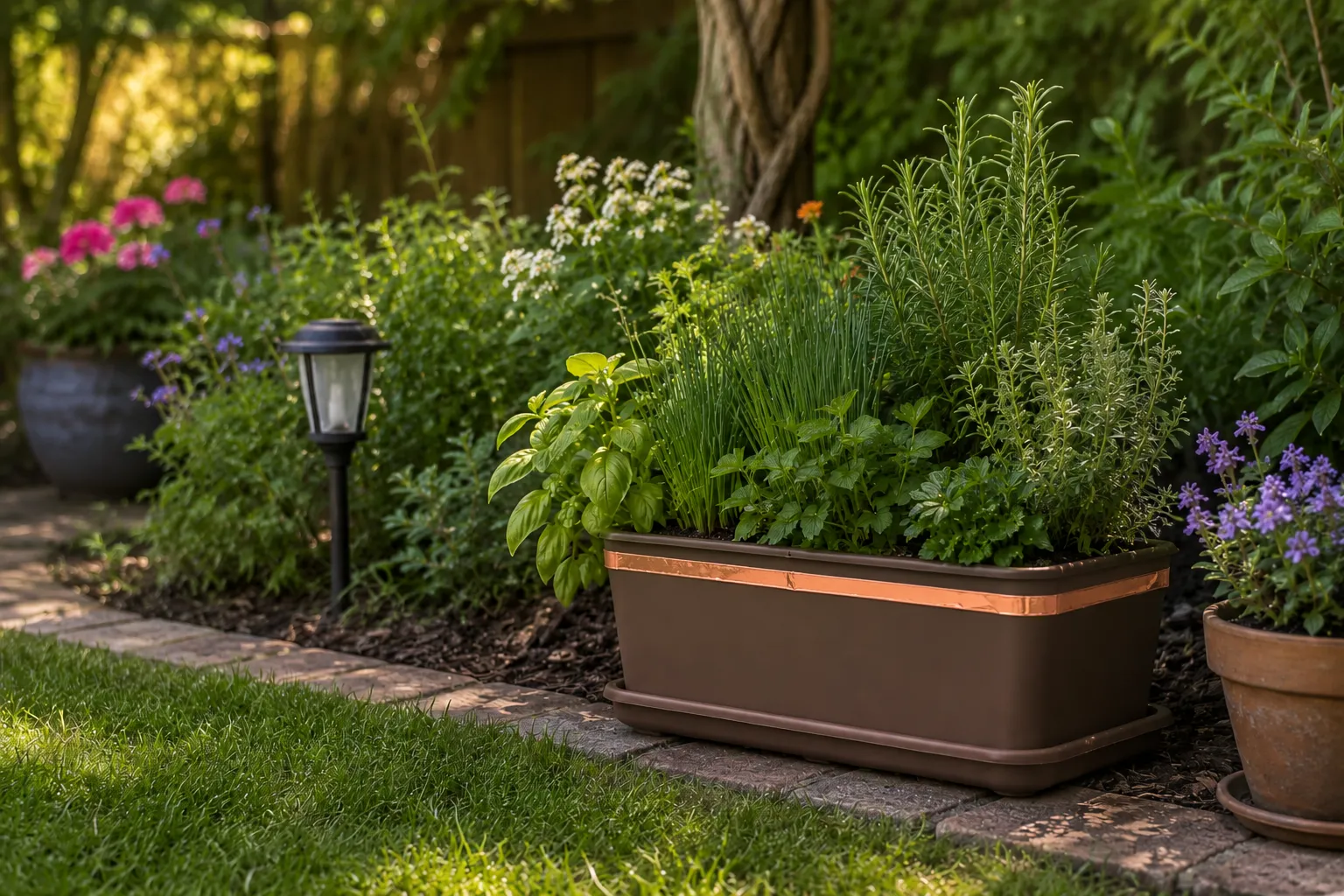
How is a copper barrier supposed to work?
A copper barrier deters slugs and snails on contact: when the animal's moist body touches the metal it gets a faint, harmless reaction it dislikes and turns back. Crucially it's a deterrent, not a poison — nothing is killed, so the only thing standing between the slug and your plant is the unbroken band of copper itself.
Why do people say copper barriers "don't work"?
Almost always for one of three reasons, and all three are fixable:
- A gap in the band. A single break — where the ends don't overlap, or the tape lifts — is an open door. The ring has to be genuinely continuous.
- A leaf or cane bridge. If a leaf flops over the band onto the soil, or a plant label or stem touches both sides, slugs simply walk over the bridge.
- Pests already inside. Copper keeps slugs out, but if there are already slugs or eggs in the pot, the barrier traps them in with your plant.
How do you give it the best chance?
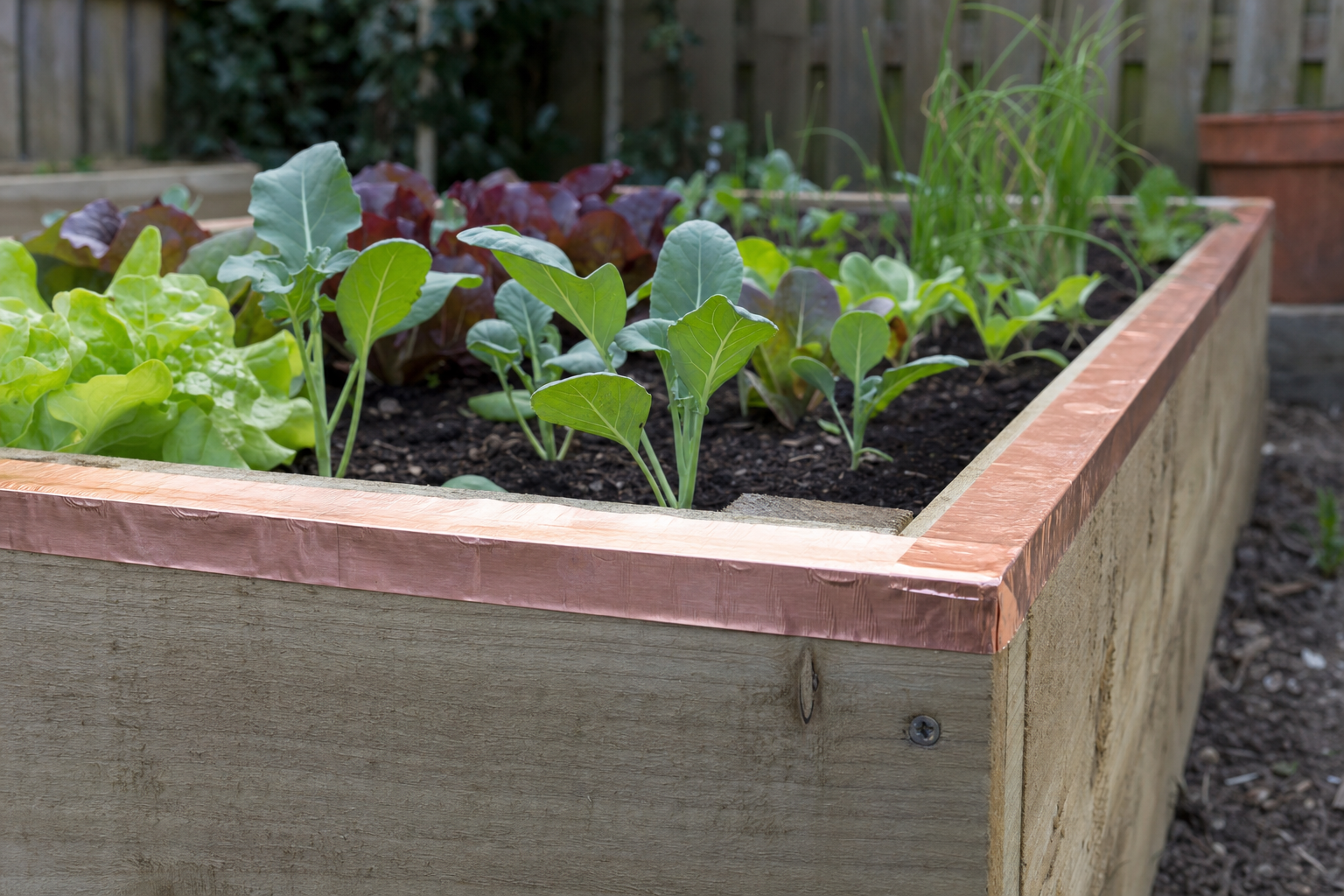
Use a wide tape (24 mm or 50 mm) so the band is hard to bridge, fit it as a complete overlapping ring on a clean, dry rim, and keep leaves and canes from bridging it. Start with slug-free compost, and in a wet, slug-heavy year run a second band above the first. Wipe the copper occasionally so it stays bright. Our slug barrier guide has the full method.
In short: wide tape, a continuous ring, a clean rim and no leaf bridges — that's the difference between "it works" and "it didn't".
What about the RHS trial?
You'll often see copper tape dismissed by pointing at the Royal Horticultural Society (RHS) slug-control research, which tested seven popular methods on lettuce and found:
"None of the treatments tested provided any benefit to the plants compared to control plots which were not treated with any method of slug control."
That's a fair result for the way it was tested — lettuce in open beds — but it isn't how most people use copper. A continuous ring on a clean pot rim or raised-bed edge is a different situation entirely, and it's where copper does its best work. The honest read: copper is a useful barrier in the right place, not a guarantee for open ground.
The verdict
Copper tape is a real, chemical-free deterrent that works well within its limits. It won't replace good garden hygiene, and it can't rescue a pot that already has slugs in it — but as one continuous, well-fitted band around clean pots and beds, it keeps a lot of plants alive without a single pellet. When we fitted it around our own pots and raised bed across a full season, the only nibbled plants were ones where a leaf had bridged the band — never where the ring was clean and unbroken.
Shop the copper-tape range Slug barrier guide
Go deeper: does copper tape work for slugs? (incl. the RHS trial) · copper tape vs slug pellets & nematodes